Nov 14, 2025
Document AI: The Next Evolution of Intelligent Document ProcessingPersona
Industry
Use cases
Insurance Document Automation
[ Insurance Document Automation ]

Use LlamaParse to pull clean, citation-backed fields from claims, ACORDs, and policy packets.
The USP

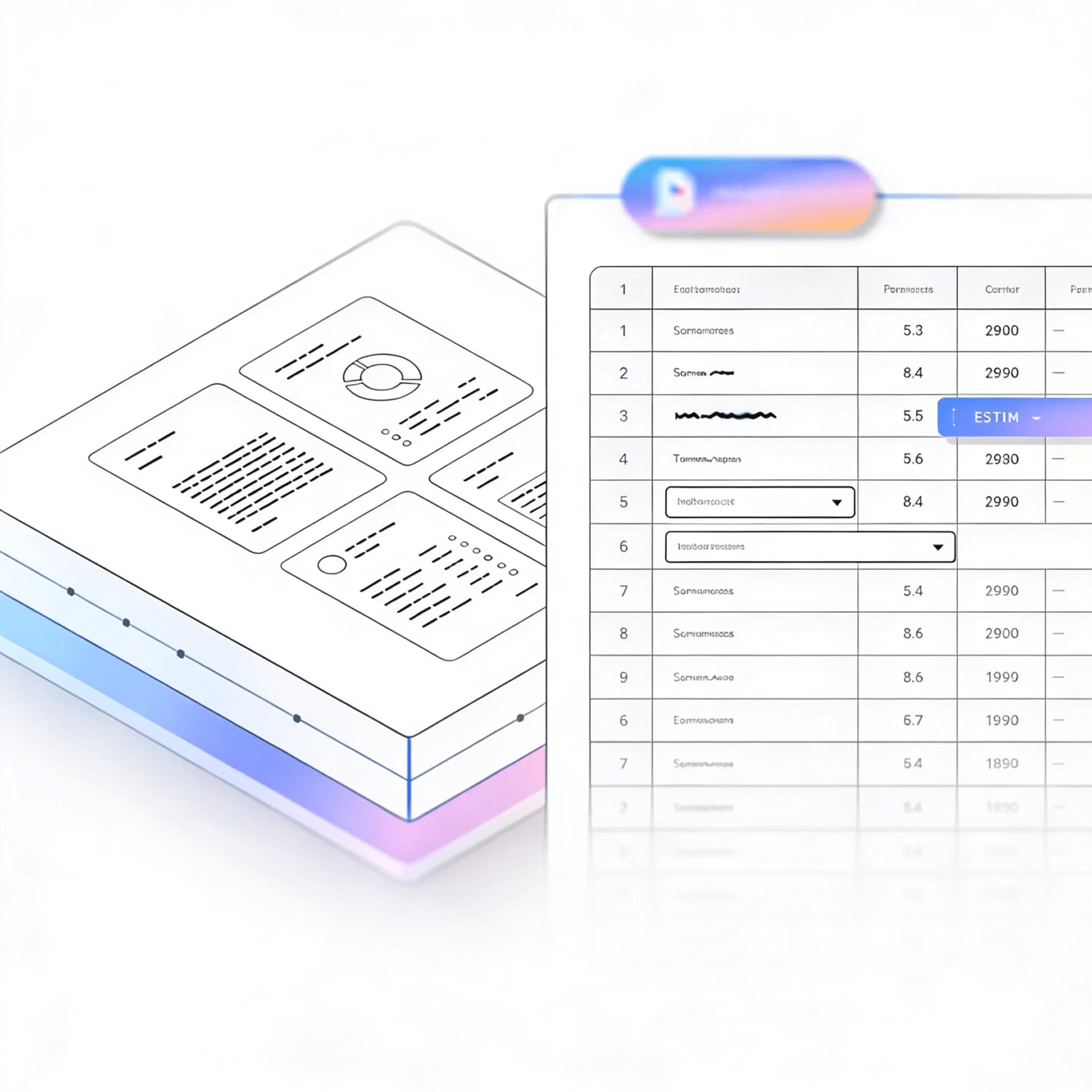
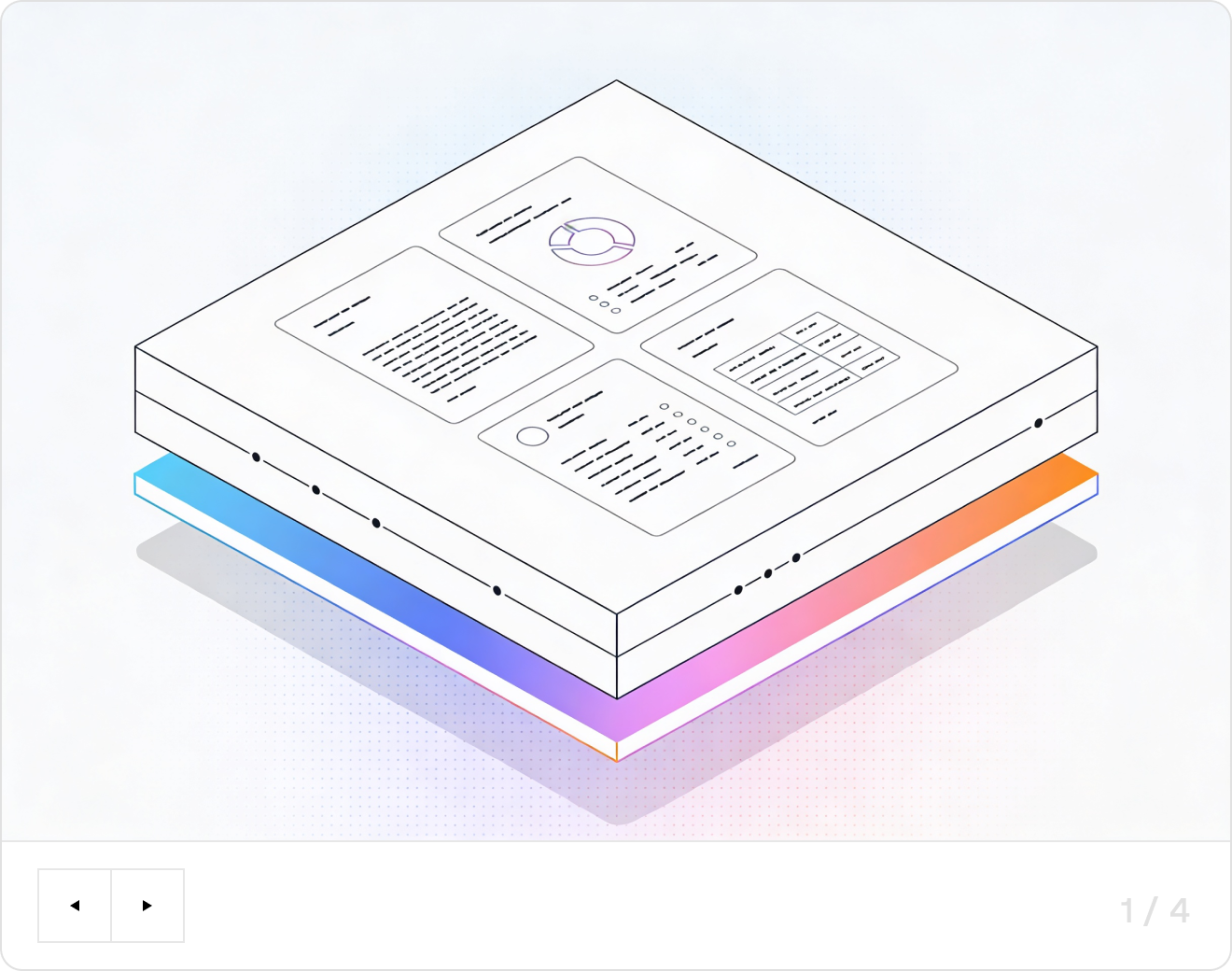
LlamaParse turns claims, loss runs, endorsements, and ACORD forms into clean, structured data so your intake and adjudication workflows run automatically. It understands layout, tables, and scanned images, then adds citations and confidence signals so your team can verify edge cases fast.
Built for Complexity

Insurance Carriers and Third-Party Administrators
Automate intake for FNOL, ACORD forms, medical bills, and loss runs by turning messy PDFs into structured JSON with citations, so adjusters can validate extractions fast. LlamaParse preserves table integrity and reading order across endorsements and schedules, reducing rework when layouts change and increasing straight-through processing for claims and underwriting.

Healthcare and Medical Billing Services
Extract diagnosis/procedure codes, line-item charges, and supporting documentation from EOBs, superbills, and prior auth packets without brittle rules that break on multi-column forms and embedded tables. Multimodal parsing captures chart-based lab values and scanned annotations, enabling faster reconciliation, fewer denials, and cleaner data flows into RCM systems.

Banking and Commercial Lending Operations
Convert borrower insurance binders, certificates of insurance, and compliance documents into auditable fields (limits, exclusions, additional insured, effective dates) with page-level traceability for reviews. Natural-language parsing instructions let teams enforce lender-specific schemas and exceptions, accelerating post-close monitoring and reducing covenant breaches caused by missed policy details.

Insurtech and B2B SaaS Startups
Ship insurance document automation quickly by using LlamaParse as the ingestion layer that converts user-uploaded PDFs into clean Markdown/JSON your app can reliably reason over. Tier-based agentic processing and cost optimization keep unit economics predictable while auto-correction loops cut edge-case support tickets from ugly scans, tables, and changing carrier templates.
The Engine Room
Feature 01
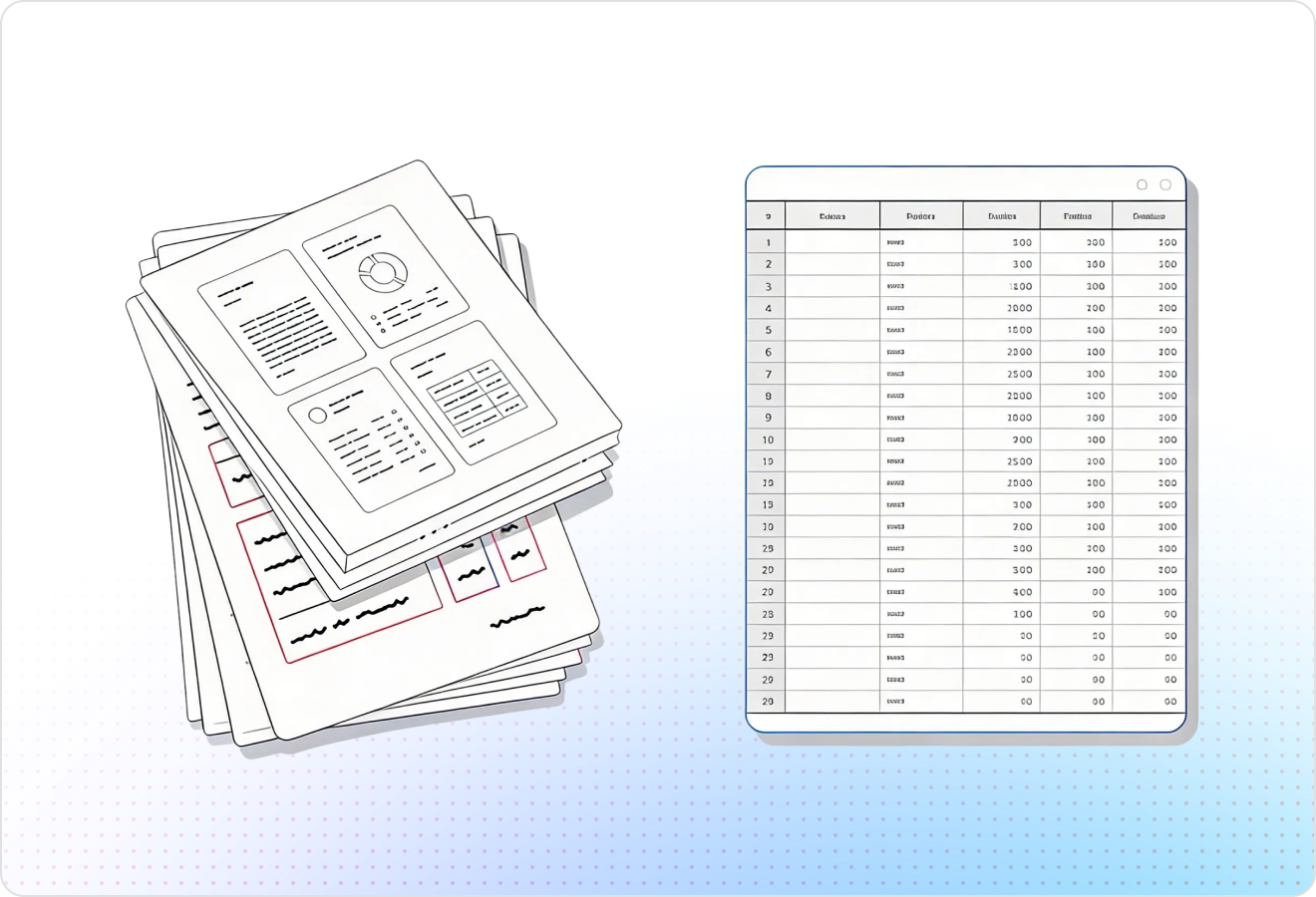
LlamaParse understands real insurance layouts—multi-column policies, ACORD forms, endorsements, and scanned packets—so fields stay in the right reading order instead of getting scrambled. That means cleaner downstream automation for underwriting intake and faster, more reliable claim triage.
Feature 02
LlamaParse accurately reconstructs tables like coverage schedules, limits/deductibles, premium breakdowns, and loss runs into AI-ready Markdown or structured outputs. You can compute exposure, validate coverage terms, and populate policy admin systems without brittle post-processing.
Feature 03
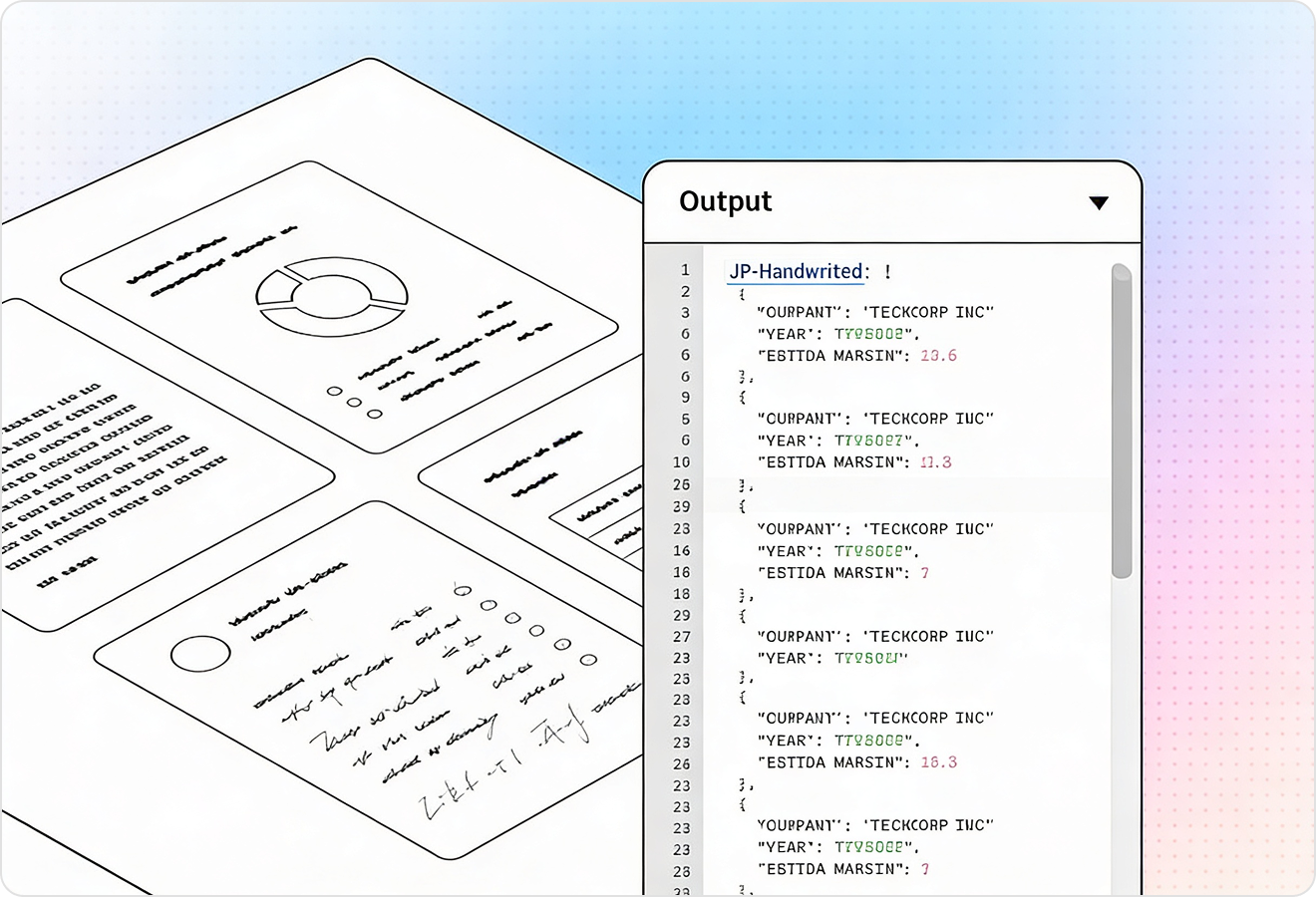
LlamaParse can emit structured JSON with rich metadata (page numbers, element types, and coordinates) so every extracted value is auditable back to the source. This makes it straightforward to support exception handling, human review queues, and compliance requirements in insurance workflows.
Feature 04
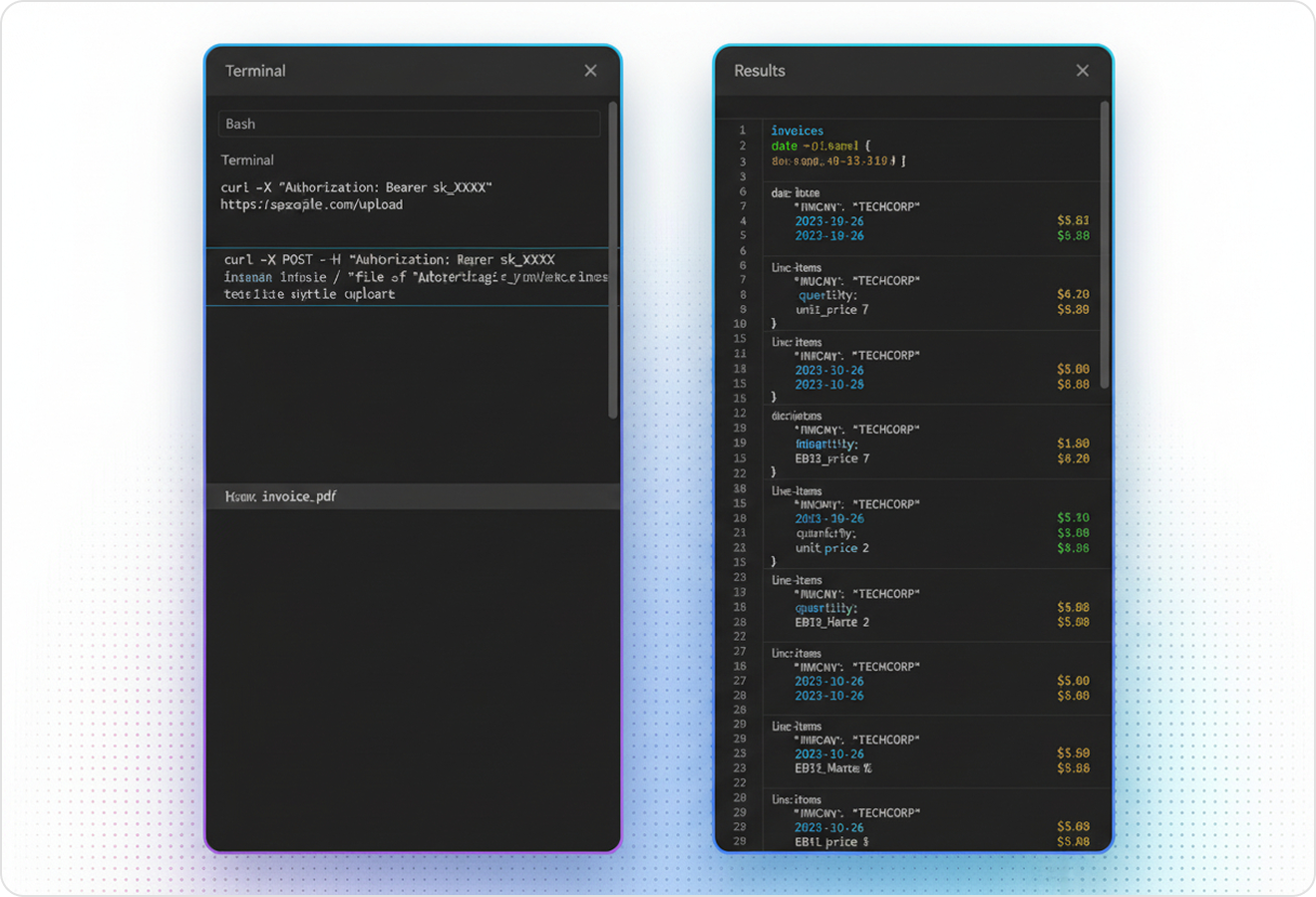
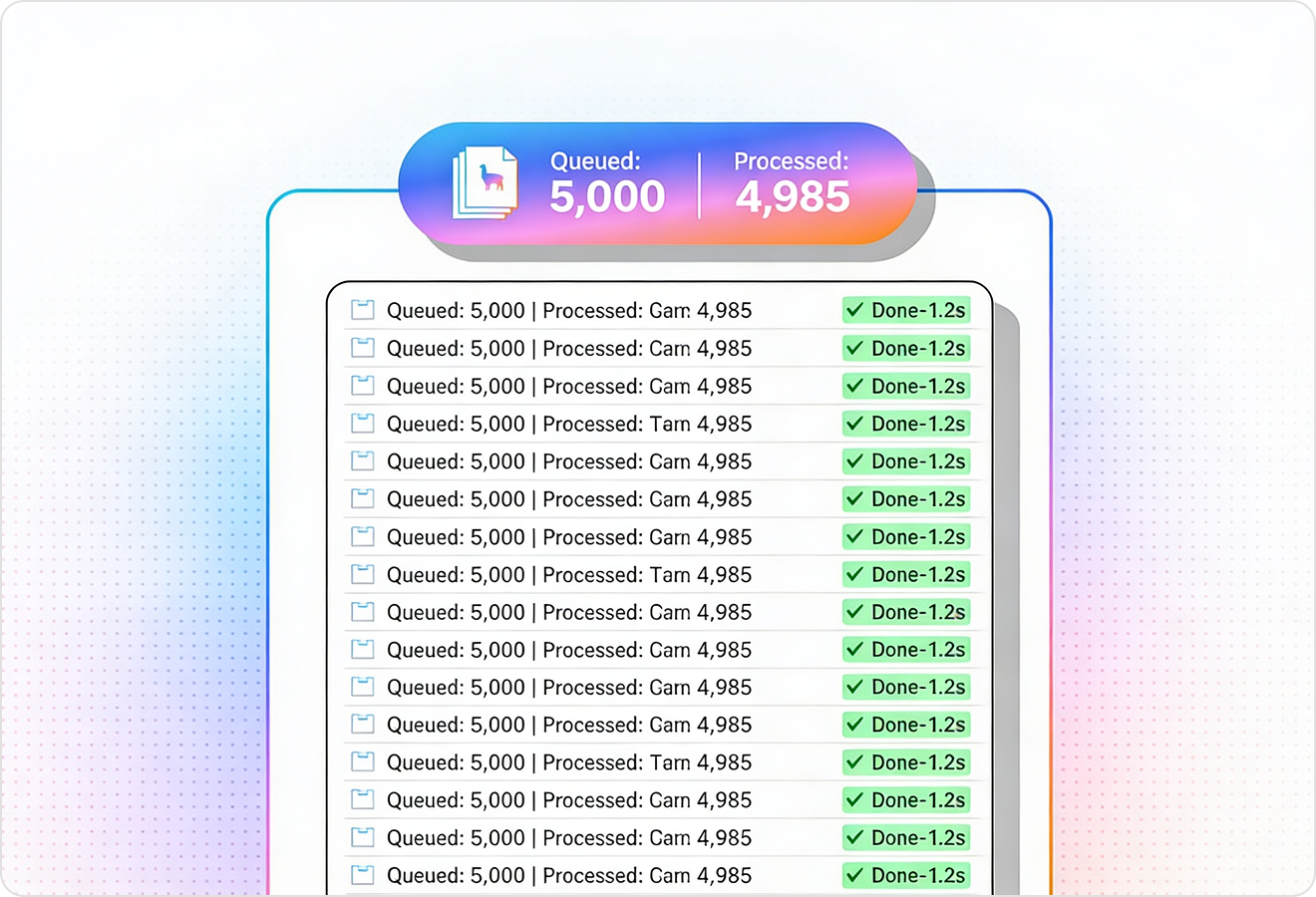
LlamaParse applies validation and self-correction during parsing to reduce common extraction errors from messy scans, stamps, and inconsistent templates. For insurance document automation, this improves straight-through processing rates for high-volume submissions while cutting manual rework.
Technical OCR documentation
Explore our developer guides to easily connect your document pipelines to LlamaParse.
Explore the framework

Our AI catches the typos that tired eyes miss.

Export to Excel, JSON, XML, or directly via API.

SOC2 Type II compliant with end-to-end encryption.

Train the tool on your specific forms in minutes, not days.

Average processing time of <3 seconds per page.
LlamaParse’s support of a wide variety of filetypes and its accuracy of parsing made it the best tool we tested in our evaluations. The LlamaIndex team was very responsive and we were off to the races within a day.
Common FAQs
01
Will it keep fields in the correct order on multi-column policies and ACORD forms?
Yes—layout-aware parsing preserves reading order across multi-column pages, endorsements, and mixed document packets so names, limits, and dates don’t get scrambled. That means cleaner underwriting intake and fewer downstream fixes when you push data into your systems.
02
How well does it extract coverage schedules, limits/deductibles, and premium tables?
It reconstructs tables and schedules into AI-ready Markdown or structured outputs so rows and columns stay aligned. You can reliably compute exposure, validate coverage terms, and populate policy admin systems without brittle custom table code.
03
Can we get structured JSON output we can audit for compliance and QA?
You can export JSON with traceability metadata like page numbers, element types, and coordinates for each extracted value. This makes it easy to support audits, handle exceptions, and route uncertain fields to a human review queue with clear source references.
04
What happens with messy scans, stamps, handwritten notes, or inconsistent templates?
Validation and auto-correction loops reduce common extraction errors caused by low-quality scans and template variation. The result is higher straight-through processing and fewer “mystery errors” that create manual rework for your team.
05
How does this improve claims triage and underwriting turnaround times in practice?
By keeping document structure intact and extracting key fields and tables accurately, teams spend less time searching and rekeying information. Faster, more reliable data capture helps you prioritize claims, speed up intake decisions, and respond to agents and insureds sooner.
06
How do we handle edge cases and exceptions without losing control of the workflow?
Traceable outputs make it simple to flag low-confidence values, request human review, and document exactly where each number came from. You keep an auditable trail while still automating the majority of submissions end-to-end.